
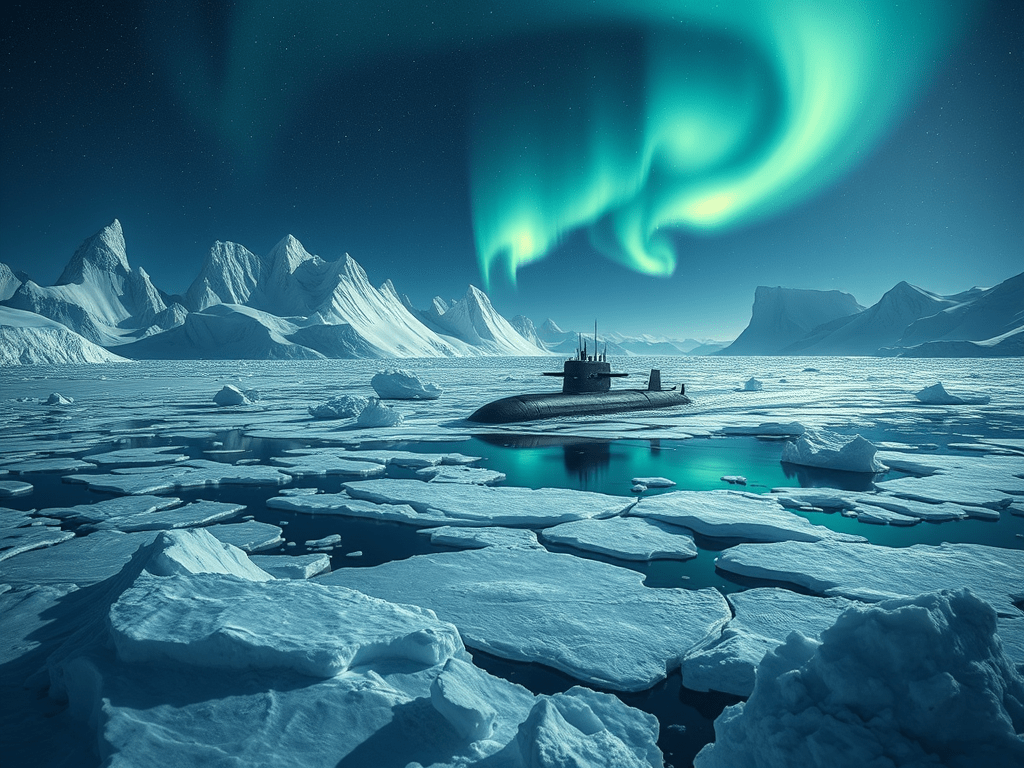
The Arctic, the home of Santa and the magical Aurora Borealis. Yet, to most, its a whole world of unknowns and mystery.In 2025, the Arctic is experiencing more eyes than ever, with a new kind of cold war unfolding and nations vying for control over the frozen frontier.
In this blog, we explore where we stand today, the importance of the Arctic from a Geo-political perspective, as well as the tensions brewing beneath the ice. It’s time to shovel the snow and ice away and take a deeper look into what is happening.
(If you’re interested in the global energy landscape, take a look at our thoughts here!
The Current State of the Arctic Power Struggle
The Arctic is no longer just a remote icy wilderness, it’s becoming a hotspot for global tension. As of 2025, countries such as Russia, the USA, China, Canada, and Norway are deeply involved in a struggle for power in the Arctic, driven by melting ice that reveals vast resources. Experts estimate the region holds up to 90 billion barrels of oil and 30% of the world’s undiscovered natural gas, turning it into a prize worth fighting over. This current state of the Arctic power struggle has its roots in climate change, with the Arctic warming four times faster than the rest of the planet, opening new shipping routes and access to rare minerals like zinc and nickel.
Russia takes the lead with a strong presence, boasting over 50 modernised military bases along its 15,000-mile Arctic coast, many rebuilt or opened since 2014 to assert control. The USA responds with bases like Pituffik Space Base in Greenland, a key site for monitoring. Greenland has been a sort of hot topic for discussion recently. Earlier this year, Greenland’s Geo-political importance to the US has been further illustrated by the Trump government’s recent efforts to even acquire the country entirely, with serious conversations made earlier this year between the US and Greenland’s sovereign protector, Denmark. With Alaska long ago being secured and with ambitions of an American Greenland, the US, along with Canada, is aiming to match Russia’s enormous Arctic coverage.
Meanwhile, Canada keeps a close watch over the Northwest Passage, a vital route it claims as its own. China, despite not being an Arctic nation, labels itself a “near-Arctic state” and partners with Russia on the Polar Silk Road, a trade corridor gaining momentum for sure.
How the Arctic Power Struggle Affects Our World
This struggle for power in the Arctic is reshaping global dynamics in ways that reach into our daily lives. Military buildups in the region are increasing and could disrupt peace, with Russia’s Northern Fleet growing and NATO exercises like Trident Juncture, involving 50,000 personnel in 2018, showing the importance of the region.
New shipping lanes, such as the Northern Sea Route, cut travel times by 40% compared to the Suez Canal, sparking trade opportunities but also security concerns. Fishermen along the coasts report more military ships passing through, and schools are starting to teach children about Arctic geopolitics, raising awareness early. Yet, this progress comes with risks, such as disputes over routes like the Northwest Passage, claimed by Canada but contested by the USA and could also lead to serious conflicts if not managed carefully.
Eco-groups are vocal, pointing out how melting ice threatens polar bears and seals, linking this power struggle to broader environmental issues. With better satellite imagery and news coverage, even small towns are talking about it, making the Arctic a frosty topic that touches us all, no matter where we live.
Science and exploration face hurdles as well. Researchers studying melting permafrost or ocean currents find their work interrupted by military activity, and warming waters are shifting fish stocks, threatening the livelihoods of coastal communities. Nations like Norway and Denmark are investing heavily in defence, while China’s growing interest in rare earth minerals adds another layer of complexity. Earlier this year, a summit in Alaska between the USA and Russia drew global attention, hinting at possible diplomatic efforts to ease tensions.
For the public, the Arctic’s future raises a mix of excitement and concern. Indigenous voices speak out against “green colonialism,” where resource grabs overshadow their rights to the land and waters. Hobbyists are tracking military movements online, sharing updates with enthusiasts, and charities are pushing for sustainable use, connecting Arctic health to our planet’s climate. It’s a struggle that weaves together security, economy, and environment, affecting everything from the food on our tables to the stability of international relations.
Global Efforts in Arctic Power Management
Nations are stepping up to manage this Arctic power struggle, blending cooperation with competition. The USA, through its Arctic Strategy, is boosting military readiness, planning new icebreakers to rival Russia’s seven nuclear-powered ones. Whilst Russia expands its Northern Fleet, viewing the Arctic as a critical defence zone. Canada has also strengthened its claim with radar systems along the Northwest Passage and China continues to invest in the Polar Silk Road, funding infrastructure with Russia.
The Arctic Council, made up of eight member states including Sweden and Finland, works to foster dialogue, though tensions since Russia’s 2022 Ukraine invasion have made meetings tricky. The UN supports rules under the Law of the Sea, aiming to clarify territorial claims, but putting them into practice remains a challenge. It’s also encouraging to see efforts such as the UK’s joint AI project with Iceland to monitor “hostile activity,” showing how innovation can bring nations together.
Future Impact of the Arctic Power Struggle
Where is the struggle for power in the Arctic heading? The future impact of the Arctic power struggle could redefine global influence with resource access driving economic growth. Projections suggest the region could add £200 billion to the world economy, thanks to energy, minerals, and trade. The USA might lead with a network of military bases, while Russia and China deepen their alliance, and Canada and Norway push to protect their sovereignty over key areas.
This future impact also ties to climate change. Melting ice, expected to leave parts of the Arctic ice-free by 2035, could accelerate global warming, but cleaner energy from Arctic gas might help if managed responsibly. Exploration could thrive, with safer routes enabling more research, tourism, or even space launches from northern sites
Arctic power management in 2025 is essential to avoid escalation. The UN’s guidelines and NATO’s presence aim to prevent conflict, but building trust among nations will be crucial. If handled well, the Arctic could become a hub of cooperation, offering prosperity for all who rely on its resources and routes.
(If you’re interested in the other ways global powers are looking to get a step ahead with resource acquisition, then our blog on Asteroid Mining might be of some interest to you!)
Challenges and Opportunities in Arctic Power Management

Opportunities in the Arctic are vast. Arctic power management could boost trade by £50 billion yearly, and safer shipping routes might cut costs by 15% for goods moving globally. A plethora of new jobs, such as climate researchers, whilst security analysts could also flourish to support this growth. Eco-benefits, like protecting polar bears and seals, align with worldwide green goals. If we overcome these challenges, the Arctic could set an example of shared success.
The Arctic’s economic potential is huge, drawing nations into the struggle for power in the Arctic. Oil and gas fields could meet 10% of global energy needs by 2040, while minerals like cobalt, vital for batteries, are drawing investment. The USA and Canada plan drilling projects, and China seeks partnerships to secure supplies.
Yet despite the economical gains, the environmental impacts of global warming are having profound affects. Melting ice exposes fragile ecosystems, with polar bear habitats shrinking by 20% since 2000. Norway is pushing for fishing quotas to protect stocks, while Russia and China expand shipping, risking oil spills.
As the region warms, with over 1,000 new vessels expected by 2030, cooperation becomes vital. The Arctic Council coordinates efforts, but success depends on open dialogue. The Arctic has become a well discussed topic within society, noting key climate links and tying the Arctic power management to our planet’s future. We expect these discussions to only grow stronger from here onwards.
Military and Diplomatic Moves in the Arctic
Military activity is a big part of the current state of the Arctic power struggle. Russia’s Northern Fleet conducts regular drills, and the USA deploys F-35 jets to Alaska, signaling military readiness to Russian aggression. Canada continues to patrol its waters, while Norway hosts NATO exercises, and China sends research vessels that double as military platforms.
Diplomacy tries to keep pace. The USA and Russia held talks in Alaska this year, and the Arctic Council pushes for environmental agreements. The UN’s Law of the Sea offers a framework, but enforcement lags.Small steps, such as joint research missions, could build trust and ease military tensions over time if done carefully and more frequently.
Further obstacles must be carefully considered. Only 20% of Arctic claims are settled under international law, leading to overlapping territories, and military buildups raise fears of escalation, with 60% of local residents worried about conflict. The costs are steep, as building infrastructure in such harsh conditions can exceed £500 million per project, and getting all nations to agree on rules tests everyone’s patience.
By 2040, Arctic power management might balance this struggle for power in the Arctic, shaping its future impact into a cooperative space. From trade routes to global security, its potential is huge, though trust and funding need attention. Nations like the USA and Russia could lead the way in Arctic power trends. However nations need to show a lot of restraint and caution, with the environmental landscape changing drastically due to recent global warming and with gaps in international law being largely prevalent still in 2025.
Whatever the course may take, one thing we know for sure, is that both physically and politically, the Arctic is set to continue to heat up.
We’d love to hear your thoughts. Would you support further arctic resource gathering to assist global economies or are you worried about the environmental & military risks? Let us know!
Till next time!
 Tales of Tomorrow
Leave a comment